
Before replacing the fridge, check its clearances and settings
A bag fits neatly beside the fridge and a box sits on top. Useful storage—or a space the appliance needs for heat dissipation? Before shopping for a new energy-efficient model, open the manual for the one already at home.
This article concerns the appliance’s installation and settings, rather than food inventory or meal planning. Start with checks that do not require a purchase.
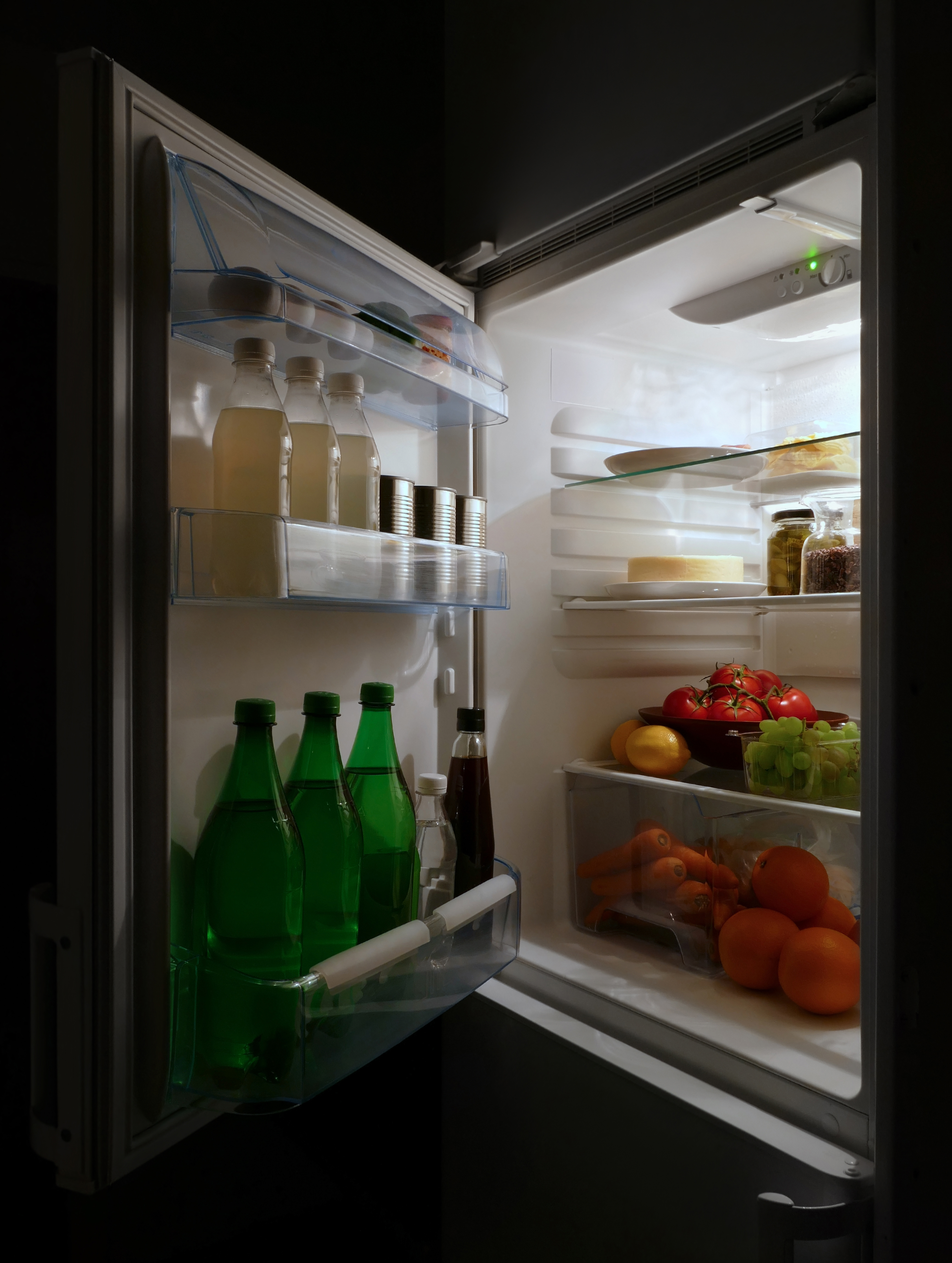
W.carter · Wikimedia Commons · CC BY-SA 4.0 · Unmodified

There is no single clearance measurement for every model
Required space and installation conditions vary. Do not assume one number of centimetres applies to every side, top and back. Find the installation section in the manual for the correct model.
The City of Yokohama’s collection of everyday environmental actions advises leaving appropriate space around a refrigerator for ventilation. Check the manufacturer’s instructions for the clearances your model needs. See Yokohama’s everyday environmental actions.
Before filling a gap with storage, establish whether it is usable space. Do not obstruct heat-dissipating areas or vents, or place objects where the instructions prohibit them. Some models allow equipment on top, but the permitted items and heat-resistance conditions differ.
Do not drag a heavy fridge alone or move it by pulling its cable. If movement is needed, follow the manual or installer’s advice and arrange safe help.
If the setting is high, remember why
A setting changed during hot weather or after adding food may remain there. Check the current setting and what your particular model recommends for normal use.
Do not automatically select a weak setting in the name of saving electricity. Ambient temperature, contents and usage affect the cooling needed. If cooling is inadequate or food storage is in doubt, appropriate refrigeration takes priority.
Sharp’s troubleshooting guidance includes checks for relevant models’ temperature controls, surroundings, clearances and air outlets. It is an example of manufacturer guidance, not a setting to copy to every fridge. Use the instructions for your own model. See Sharp’s checks for insufficient cooling.
Check the door with the usual contents inside
Look for a pocket item, drawer or edge of a bag preventing the door from closing. Check the fridge in its normal filled condition. First remove an obstruction rather than reorganising the entire interior.
For seal cleaning, follow the approved products and method in the manual. Avoid strong chemicals, improvised tools or pulling damaged parts. If a problem continues, contact the manufacturer instead of treating it as an ordinary energy-saving adjustment.
Turning the fridge off each night to reduce electricity use is not recommended here. Maintaining the conditions needed to store food is fundamental to using the appliance.
Separate electricity use from the price assumption
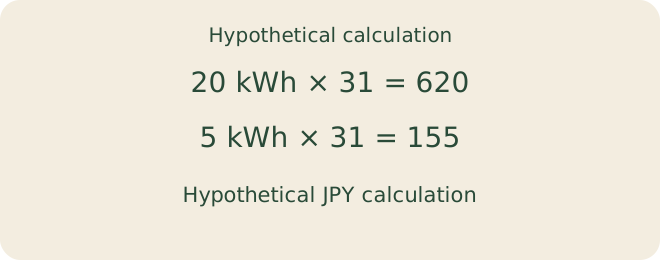
Suppose an adjustment reduced annual consumption by 20 kWh and the assumed unit price were JPY 31 per kWh. Simple multiplication gives 20 × 31 = JPY 620 a year. Both figures are hypothetical, not a measured result of these checks or a current electricity-plan quotation.
| Hypothetical condition | Calculation |
|---|---|
| Annual reduction 20 kWh; JPY 31/kWh | JPY 620 a year |
| Annual reduction 5 kWh; JPY 31/kWh | JPY 155 a year |
| No established consumption difference | Saving remains unknown |
Actual bills also depend on the tariff and adjustments. A whole-household bill includes other appliances, making it difficult to attribute a difference precisely to the fridge. A lower bill than last month does not prove a particular clearance saved a particular amount.
A plug-in monitor, if used, must suit the appliance’s rating and operating conditions. There is no need to rush into buying one solely for this exercise. Start with the installation and settings you can check in the manual.
Keep the model number somewhere easy to find
Once you locate the manual, save the model number and its official link. Warranty or repair records can also be kept somewhere useful for your own reference, without making private details public.
If the clearances, setting and door closure are already appropriate, there may be nothing to buy now. A fault or safety issue calls for advice, including repair or replacement where appropriate. Saving does not require keeping an unsuitable old appliance running indefinitely.
Even if replacement becomes necessary later, understanding the available space and your use will help. Today, start by checking around the fridge and opening one relevant page of the manual.
Sources and assumptions
Official information checked November 5, 2026, Japan time. The context is a refrigerator used in Japan. Follow model-specific installation, setting and cleaning instructions. The 20 kWh, 5 kWh and JPY 31/kWh figures are hypothetical, with no guarantee of savings or a quoted tariff.