
Setsuyaku Life / Guides
Meal planning without a rigid menu: put the ingredients you have to work

- Planning a whole week’s meals is tiring
- When plans change, ingredients are left over
- Do I need to cook every day to save money?
If weekly meal plans never seem to stick, try starting with your schedule and existing ingredients. Here is how to choose a few possible dishes and buy only what is missing.
Does meal planning save money? What to do when it is hard to keep up
Choosing dishes first can make shopping easier. But if every change of plan leaves ingredients unused, or cooking itself becomes a burden, you may be planning too far ahead.
The purpose is to connect shopping with eating, not to follow a fixed menu perfectly. Start with the next few meals at home.
Schedule: check when you will eat at home before choosing dishes
Write down how many people will eat at home and how often. Note days out and late returns too.
Busy days do not need complicated meals. Include easier preparation so the plan fits your life. This is not about skipping necessary meals or eating too little.
Ingredients: start with what you want to use first
Look in the fridge and choose ingredients to use first. Think of familiar dishes that could use them.
With onions and carrots, soup or a stir-fry might work. Starting with dishes you know can be easier than researching several new recipes.
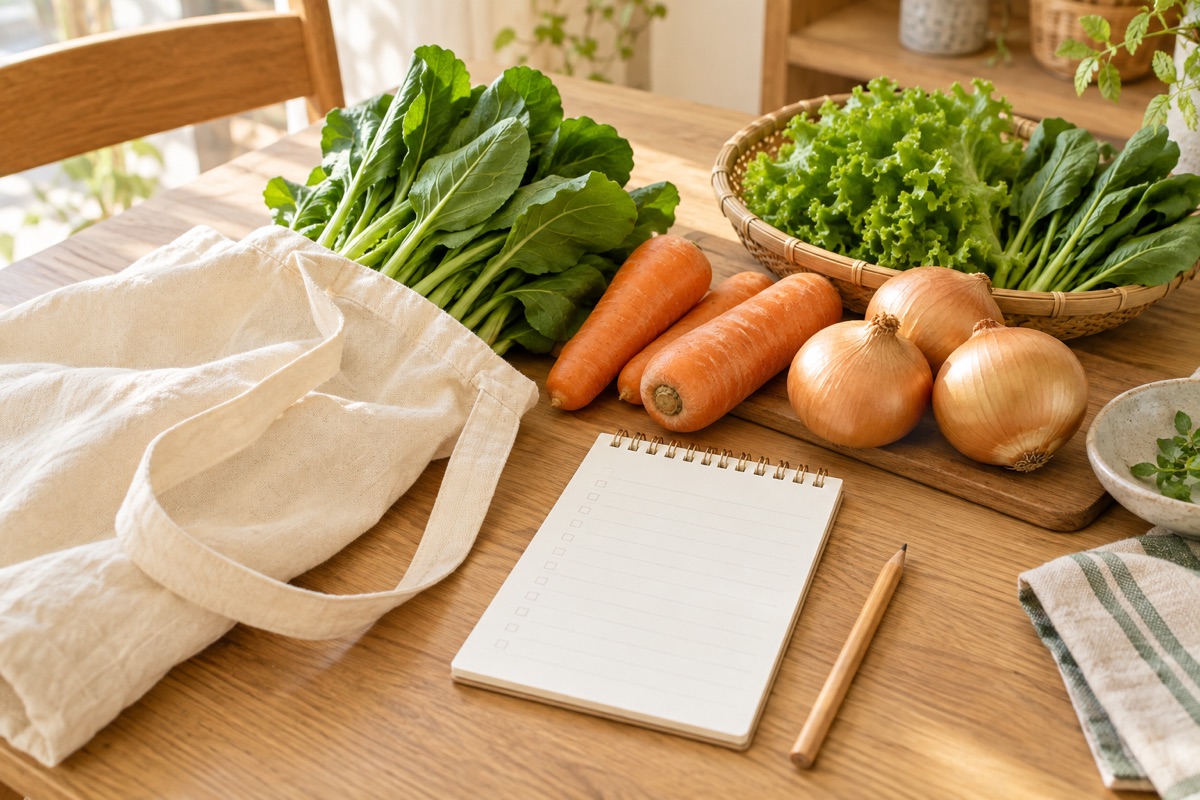
An example: use the same ingredients in different dishes
Vegetable soup tonight, then a vegetable stir-fry on the next evening at home: one set of ingredients can have several uses.
Here, “using ingredients across meals” means allocating them to different dishes. It does not mean keeping cooked food for long periods or repeatedly reheating it. Check condition, storage instructions and dates when planning.
| What to consider | Example entry |
|---|---|
| What is at home | Onions, carrots and rice |
| Planned meals at home | Dinner tonight and tomorrow |
| Possible dishes | Vegetable soup / vegetable stir-fry |
| Before buying more | Number of people, quantities needed and food dates |
Shopping: note only what your possible dishes are missing
Compare dish ideas with your stock and move only missing ingredients onto the list. Check portions and quantities at this stage too.
This example illustrates a planning method, not a nutritionally balanced menu or a guaranteed budget. Adapt meals to health needs, tastes and household circumstances.
When plans change, adjust the next shop
If you eat out unexpectedly, check the ingredients left and revise the next shopping quantity. Rather than seeing it as a failed plan, start again with what you have.
If the same ingredients are repeatedly left over, buy less next time or find more uses. Make small, manageable adjustments rather than abandoning the whole method after one setback.
A common question: must I cook every day to save?
Cooking frequency alone does not tell you the cost or effort involved. Time available and whether you can use ingredients up matter too.
You can plan days for cooking and days for prepared food. Review actual spending to find a combination you can sustain.
Start with two meals; a few options are enough
For your next two meals, note when, how many people and which ingredients at home you will use. Even a tentative dish gives shopping some direction.
As well as cost, notice whether less food was left over or dinner felt easier to plan. Keep the pleasure of eating while finding a method that fits.
Final check: what could you try today?
You do not have to change everything at once. Try one thing at your next shop or meal.
- Checked when and how many people will eat at home
- Chosen ingredients to use first
- Listed familiar dish options
- Added only missing items to the shopping list
- Will adjust using existing stock if plans change
Further reading
This source supports the general approach to reducing food waste. The notes and plans in this article are examples created by this site.
Ministry of Agriculture, Forestry and Fisheries: ways to reduce food wasteAccessed October 22, 2026