
Setsuyaku Life / Guides
Fewer cards, simpler finances: how to review the cards you keep
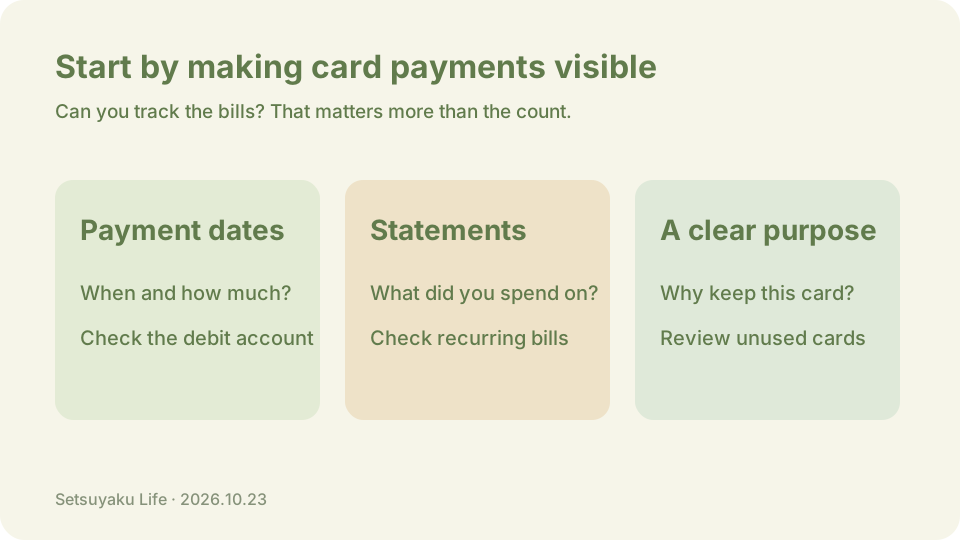
Are payment dates and statements getting harder to follow as your cards multiply? Before reducing their number, review each card’s purpose and recurring payments so you can manage the cards you keep.
Fewer cards means fewer places to check
Each card can mean another app, payment account, reward expiry date and annual fee to monitor. Fewer accounts can make monthly spending easier to follow and unused cards harder to overlook.
One card is not automatically the answer. You may need different payment networks, separate household and work expenses, or a backup if a card is lost. Aim for a set you can manage comfortably, rather than a particular number.
Make a payment note for each card
List cards stored in apps or drawers as well as those in your wallet. Do not record full card numbers or security codes; a name and purpose are enough.
- Card name and usual purpose
- Statement closing date, payment date and debit account
- Annual fee, when it is charged and waiver conditions
- Utilities, phone bills, subscriptions and other linked payments
- Outstanding purchases, instalment or revolving balances, remaining points and expiry dates
Labels such as “household shopping” or “recurring bills” can reveal overlapping roles. Choose what to keep based on future use, rather than past sign-up perks.
| What to look at | Questions to help you decide |
|---|---|
| Purpose | Does it serve shops or uses that other cards do not? |
| Management | Can you comfortably check its statements and payment dates? |
| Cost | Does your use justify the annual fee and other charges? |
| Before cancelling | Have you checked recurring payments, balances, points and additional cards? |
Use both statements and transaction alerts
Transaction alerts help you spot activity early, but may not show the complete final bill. Check your settings and compare the final statement’s amounts, merchant names and dates. For an unfamiliar charge, first check family use and the merchant’s registered name, then contact the issuer through its official channel.
Instead of rushing to enter card details through an email or text link, use your usual official app or website. A monthly review date can help you keep the habit after reducing your cards.
Check recurring payments and points before cancelling
Change the payment method with each electricity, gas, phone, insurance or annual-service provider. Cancelling a card does not automatically cancel the service. Confirm the change and the next billing method before proceeding.
Source: Japan Consumer Credit Association, cautions for recurring payments
Rules for points, ETC and family cards, and electronic-money balances vary by product. If instalment or revolving balances remain, check repayment arrangements, any accelerated payment and how long statements remain accessible. Cancellation does not erase debt.
Give each remaining card a clear role
Once payment methods are updated, check that the remaining cards do not concentrate too much spending. Have the required money ready by the debit date, and do not confuse a credit limit with a household budget.
Put manageability ahead of extra purchases or contracts for points. Regularly weigh a fee-paying card’s benefits you actually use against its cost. A clear reason for each card can make the number you keep feel right.
Final checklist
- Listed cards in use and in storage
- Checked payment dates, annual fees and balances
- Changed utility and annual-service payment methods
- Checked points, ETC cards and family cards
- Confirmed access to statements through the final bill
Official sources & references
Japan Consumer Credit Association: recurring utility and phone paymentsJCB: benefits and cautions when cancelling a credit cardRakuten Card: checking unfamiliar chargesChecked October 23, 2026 (Japan time). Amounts and terms may change. Check current official terms before applying, buying or cancelling. This is not a report of personal use or a specialist-reviewed article.