
JPY 800 away from free shipping? Check the total before adding anything
You put one thing you need in an online basket. A message says that spending another JPY 800 will unlock free shipping. It is tempting to browse for something to fill the gap. Before doing that, compare the final payment, rather than whether the delivery line says zero.
If avoiding a JPY 500 delivery charge requires an extra JPY 800 purchase, you pay JPY 300 more today. Whether the added item is useful makes a real difference to that decision.

Ivan Bandura · Wikimedia Commons · CC BY 2.0 · Unmodified

Two baskets, two different totals
Consider an item costing JPY 3,200 including tax. Assume delivery is JPY 500, orders of JPY 4,000 or more qualify for free shipping, and an additional item costs JPY 800. These are hypothetical conditions, with no coupons or regional surcharges.
| Choice | Payment today |
|---|---|
| Buy only the needed item | 3,200 + 500 = JPY 3,700 |
| Add a JPY 800 item | 3,200 + 800 = JPY 4,000 |
| Wait until the item is needed | Nothing this time; check later conditions again |
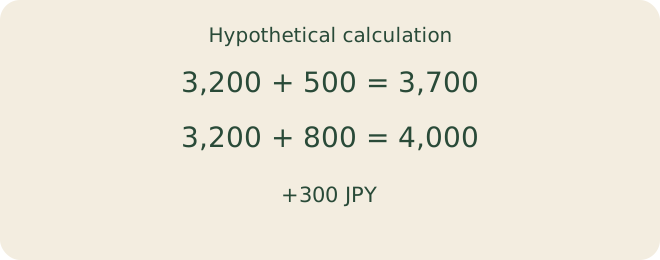
The second basket removes the delivery charge but increases the total by JPY 300. If the extra item is unnecessary, paying for shipping is the smaller outlay. A delivery charge does not automatically make a purchase a mistake.
If you will definitely need a household supply next week, and can add the same product at a normal price, compare both purchases together. An overpriced item or a quantity you cannot finish can undermine the benefit.
“Someday” is not the same as “next week”
While looking for basket fillers, you may find another towel, a snack or a storage basket. None is inherently a bad purchase. Ask whether you wanted it before seeing the shipping message.
Give each possible addition a use date and a place to keep it. “The detergent has one use left, so I need it this weekend” is close to a plan. “It might be useful someday” is not yet a plan. Moving an uncertain item to a wish list leaves the option open without paying now.
If the extra purchase also requires new storage, both the cost and space grow. Avoid buying several easy-to-store products simply because you have not checked what is already at home.
Include the next order, without delaying essentials
Combining orders can help, but there is no reason to postpone something urgently needed. Compare the delivery date with the date you actually need the item.
When combining two orders, check the product prices, seller, dispatch location, delivery address and arrival conditions. Items from different sellers on the same website may have separate shipping rules. The actual order screen matters more than an assumed site-wide threshold.
A subscription offering different shipping terms is a separate commitment from a single purchase. If you have not read the later charges, frequency and cancellation terms, delivery savings alone are a poor reason to select it.
Read the amount beside the final button
Japan’s Consumer Affairs Agency explains the display of selling prices, delivery charges and other costs in its mail-order guide. Look beyond a prominent basket banner and check the total before confirming the order.
Payment fees, regional surcharges and conditions after a coupon may also matter. If a coupon takes the qualifying amount below the shipping threshold, add up the totals again before adding yet another item.
“Free shipping” does not mean that transporting the parcel has no cost. The agency explains that the expression normally means the consumer does not pay shipping as a separate charge. Reducing delivery burdens and avoiding unnecessary purchases can both be worthwhile. See its explanation of free-shipping displays.
It is fine to pay for delivery and finish
If you need one item, buying that item and stopping is a valid choice. If the basket addition is genuinely necessary, compare the next purchase as well. If nothing must be decided today, save the basket and step away.
For your next online order, write down just two figures: the total for the necessary item alone and the total after adding more. Choose what you are happy to receive, use and pay for. A small frustration about delivery need not dictate the whole purchase.
Sources and assumptions
Official information checked November 5, 2026, Japan time. This article concerns shopping in Japan and uses Japanese yen. All example amounts and thresholds are hypothetical, not a retailer’s current offer. Check prices, taxes, delivery charges, payment fees and delivery terms for each order.