
Is the usual wash cycle right for this garment? Start with the care label
A favourite piece of clothing is something you would like to keep wearing. When it loses its shape or seems smaller after drying, replacing it can become tempting. Before looking for a new washing-machine feature, read the small label attached to the garment.
Can it be washed at home? Can it go in a tumble dryer? How should it be dried? Those questions are a useful pause before putting everything into the usual programme.
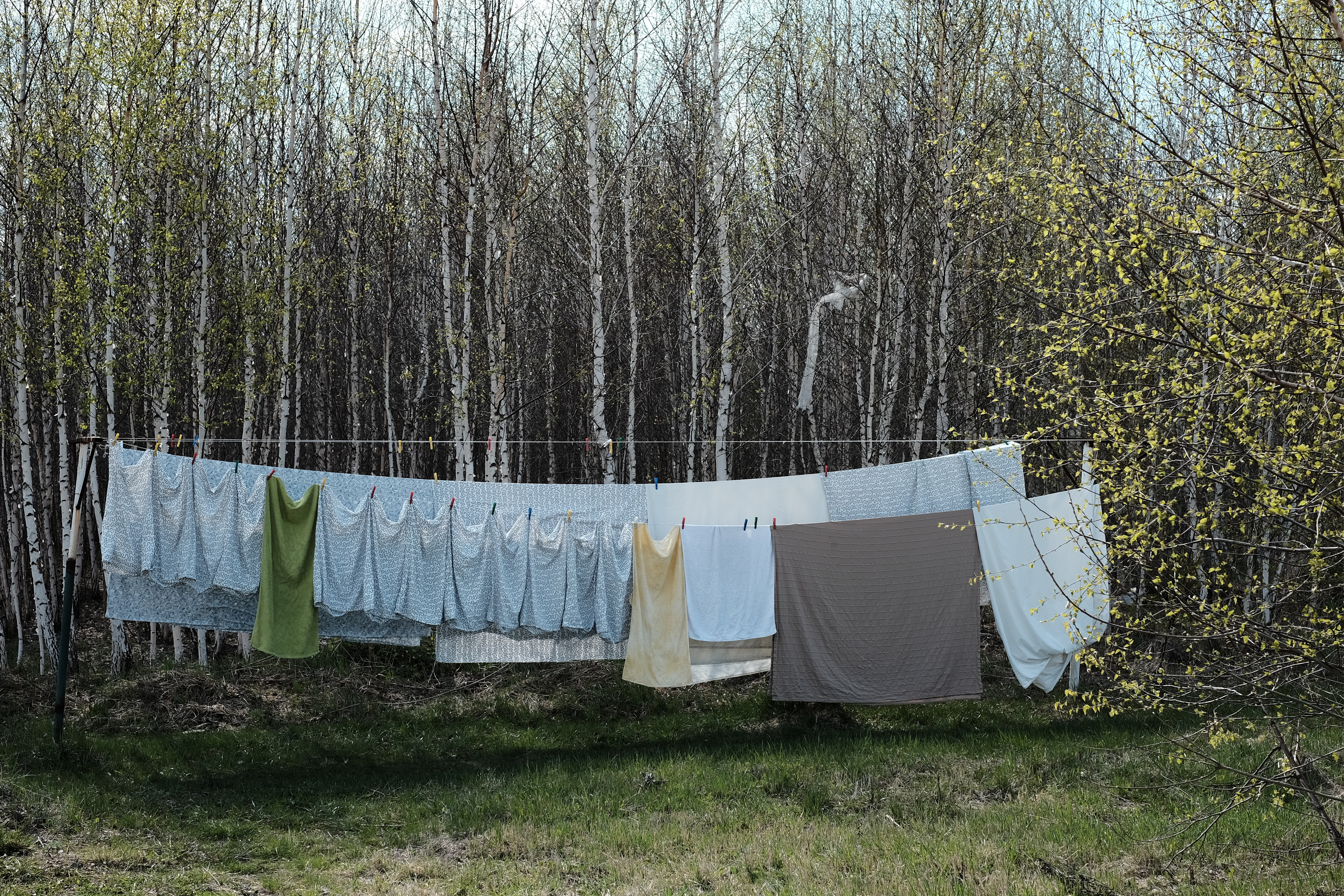
Dmitry Arslanov arslanovdr · Wikimedia Commons · CC0 · Unmodified

A temperature number is a limit, not a command to heat the water
Japan’s Consumer Affairs Agency explains care symbols used for washing and other treatments. For example, “40” inside the washtub indicates the upper limit for the washing-liquid temperature. It does not mean that every wash must be at 40°C. See the official care-label resources.
Other parts of the symbol, including bars below it, distinguish the strength of treatment. Do not group garments from the number alone. Read the whole label and consult the agency’s chart and the garment supplier’s instructions when unsure.
Japan’s labelling rules have been revised, so an older garment and a newer one may carry different-looking labels. Rather than memorising the symbols, check the label on the garment against the official quick-reference chart each time. This article links to official charts instead of redrawing a symbol set.
Have a reason for grouping the wash
Colour, fabric, dirt, attachments and care instructions can differ even when clothes share a laundry basket. For a first wash in particular, read the label and additional instructions before mixing items together.
A laundry net does not make every garment suitable for the same programme. Follow any instruction to use one, but do not treat it as a way to wash something that must not be washed. Handle zips and decorations according to the clothing and appliance instructions too.
Follow the machine’s capacity and programme directions. Packing it excessively to reduce the number of loads may lead to another wash and more work. That does not mean postponing necessary laundry either; aim for a load the selected programme can handle.
Check drying separately
A garment that allows machine washing does not automatically allow tumble drying. Look at the drying instructions separately. If they specify flat drying, line drying or shade, plan a suitable place.
The convenience of an all-in-one washer-dryer still needs to fit each garment’s conditions. If some items must come out before drying, separating them before starting can make the process less hurried.
For outdoor drying, consider wind and the surroundings as well as the weather. A photograph of hanging laundry is not a universal instruction for every fabric. The label on the garment you have takes priority.
The cheaper garment can have a different care cost
When deciding whether to buy something, read its care requirements alongside the price. Can you handle it at home, store it properly and budget for professional care if needed? The point is to understand the commitment, rather than abandon clothing you enjoy.
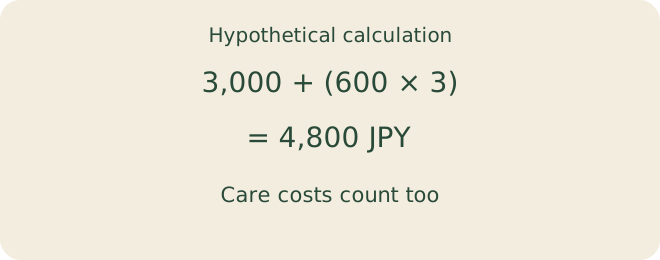
Suppose a garment costs JPY 3,000 including tax and three care visits cost JPY 600 each. Purchase plus those visits totals JPY 4,800. The JPY 600 is a hypothetical price, not a real cleaner’s tariff, and not every garment needs that treatment. Use the example to consider a particular item in your own routine.
| Hypothetical item | Cost |
|---|---|
| Garment | JPY 3,000 |
| Three care visits at JPY 600 | JPY 1,800 |
| Total within this example | JPY 4,800 |
An expensive garment does not necessarily last longer, and an inexpensive one is not necessarily easy to care for at home. Materials, construction and use differ. Consider manageable care alongside the purchase price.
Read the next favourite garment’s label
There is no need to learn every symbol in one day. Start with one item you plan to wash and check washing, drying and hanging instructions. If you are unsure, seek the supplier’s guidance rather than experimenting with chemicals or temperatures.
These steps cannot guarantee that an already shrunken or damaged garment will recover. Avoid forcing a remedy and consult a specialist where appropriate. The aim is to care for clothing that remains usable, so replacement is less hurried.
This is neither a demand to reduce washing indiscriminately nor a shopping list of new tools. It is a way to choose suitable treatment for one garment. Saving can include looking after things you already like.
Sources and assumptions
Official information checked November 5, 2026, Japan time. This article concerns Japanese garment-care labelling. Costs are hypothetical Japanese-yen amounts. Follow the actual label and the garment and appliance manufacturers’ instructions; this article cannot determine the correct treatment for an individual garment.
Consumer Affairs Agency: current laundry-symbol resources and official charts